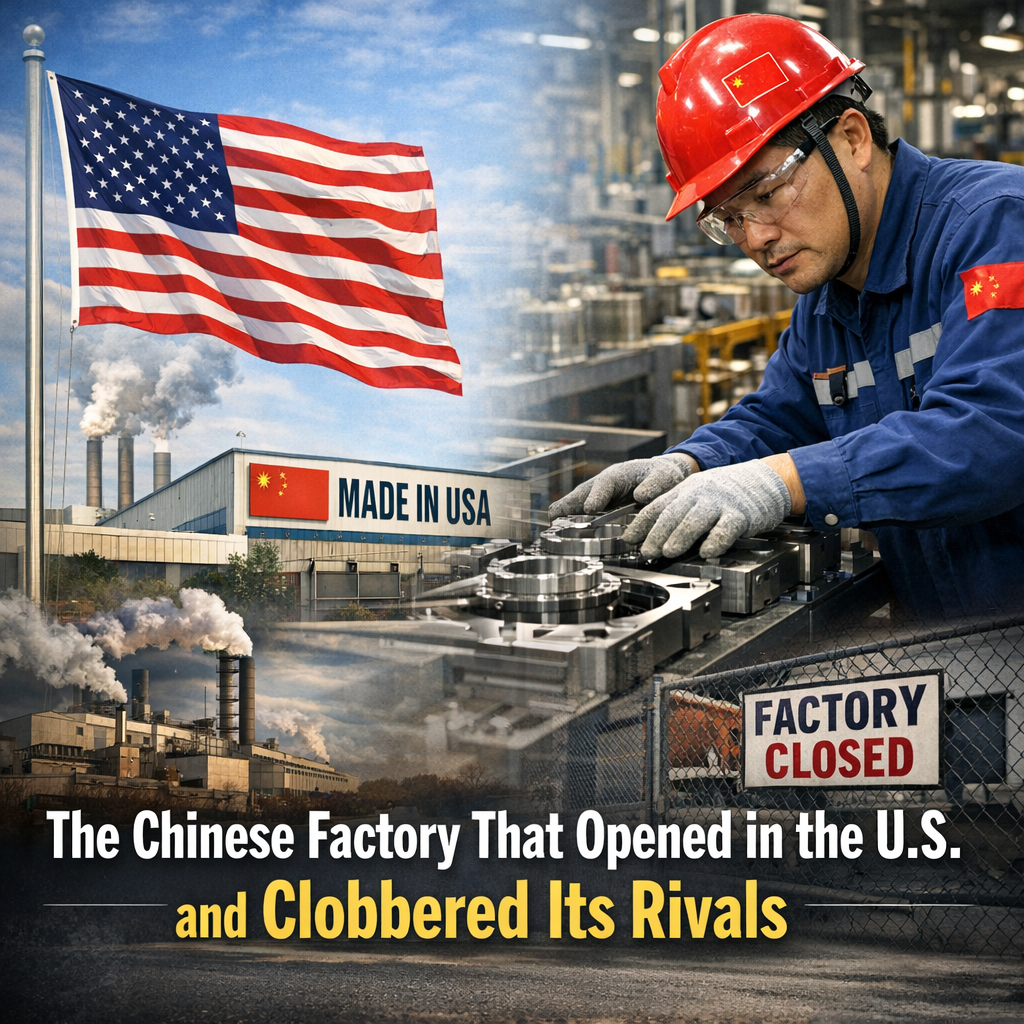
Global Investment Revives an American Factory
When a Chinese-owned factory began producing automotive glass in Ohio, it was initially celebrated as a win for American jobs. A shuttered General Motors plant had found new life, and hundreds of workers were back on the payroll. But as the company—Fuyao Glass Industry Group—grew into one of the largest auto glass suppliers in the United States, the story became more complicated. Questions about global competition, government subsidies, labor practices, and even national security started to surface.
This article unpacks the rise of Fuyao in Ohio, the controversy surrounding its success, and what it reveals about the broader challenges facing American manufacturing in a globalized economy.
Scaling Success and Competitive Questions
Fuyao’s expansion into the United States began in 2014 when the company purchased a former General Motors assembly plant in Moraine, Ohio. The facility had been idle since the 2008 financial crisis, and its reopening was widely seen as a symbol of economic recovery.
Fuyao invested hundreds of millions of dollars into the plant, transforming it into a state-of-the-art automotive glass production facility. Today, it supplies glass to major automakers, including Ford, General Motors, and Honda.
Several factors contributed to Fuyao’s rapid success:
- Economies of scale: As one of the largest glass manufacturers globally, Fuyao can produce at lower costs.
- Vertical integration: The company controls multiple stages of production, reducing reliance on external suppliers.
- Global expertise: Decades of experience in international markets helped Fuyao adapt quickly.
For local communities, the benefits were tangible. Jobs returned, tax revenue increased, and the facility became a major employer in the region. However, success in business often invites scrutiny—and Fuyao was no exception.
Critics argue that Fuyao’s competitive advantage may not be entirely organic. One of the central claims is that the company benefits from subsidies provided by the Chinese government, allowing it to undercut competitors.
These concerns are not unique to Fuyao. Across multiple industries, Chinese firms have faced similar accusations, particularly in sectors like steel, solar panels, and electronics.
In this case, a key competitor—Vitro, a major glass producer headquartered in Mexico—has voiced concerns about Fuyao’s pricing and business practices. However, some observers dismiss these complaints as typical market rivalry. As one regional business leader noted, it may simply be a case of a competitor losing market share rather than evidence of wrongdoing.
This highlights an important reality: globalization often blurs the line between fair competition and structural advantage. When companies operate under different regulatory systems, comparing them directly becomes difficult.
Workplace Culture and Cross-Border Challenges
Beyond pricing and competition, cultural differences have also shaped perceptions of Fuyao’s operations. A well-known documentary, “American Factory,” captured some of these contrasts, showing how Chinese management practices sometimes clashed with American workplace norms.
Examples included:
- More rigid organizational structures
- Higher expectations for discipline and productivity
- Differences in communication styles between management and workers
One striking observation involved the contrast in workplace formality and coordination. Chinese executives emphasized uniformity and efficiency, while American workers often valued autonomy and flexibility. These differences occasionally led to tension, misunderstandings, and debates over labor practices.
Such cultural gaps are not unique to this case. Any multinational operation must navigate differences in labor expectations, management styles, and legal frameworks. In Fuyao’s case, the learning curve was particularly visible because of the scale and public attention.
Economic Benefits Meet Strategic Concerns
As Fuyao’s presence in the U.S. has grown, so have broader concerns about foreign ownership in critical industries. Automotive glass may not seem strategically sensitive at first glance, but it is part of a larger supply chain that supports the automotive sector—an industry vital to the U.S. economy.
Critics worry about several potential risks:
- Dependence on foreign suppliers for essential components
- Influence of foreign governments through corporate ownership
- Long-term erosion of domestic manufacturing capacity
Supporters, however, argue that foreign investment strengthens the U.S. economy by creating jobs, revitalizing communities, and fostering competition. They point out that Fuyao operates under U.S. laws and employs American workers, making it part of the domestic industrial ecosystem.
This debate reflects a larger national conversation: how to balance openness to global investment with the need to protect strategic industries.
What the Fuyao Story Reveals About Global Manufacturing
The story of Fuyao in Ohio offers several important insights into modern manufacturing and global trade:
First, globalization is no longer a one-way street. Foreign companies are not just exporting goods to the U.S.—they are building factories and hiring American workers.
Second, competition is increasingly complex. It’s not just about product quality or efficiency, but also about regulatory environments, government support, and access to capital.
Third, cultural integration matters. Operational success depends not only on technology and investment but also on how well companies adapt to local norms and expectations.
Finally, economic benefits and strategic concerns often coexist. A project that creates jobs can still raise valid questions about long-term national interests.
If you want to better understand cases like Fuyao’s, here are a few practical approaches:
Start by looking at the full supply chain. Instead of focusing on a single factory, consider how it fits into the broader industry. Where do raw materials come from? Who are the end customers?
Pay attention to policy frameworks. Trade agreements, tariffs, and subsidies can significantly influence competitiveness. These factors often matter as much as business strategy.
Compare multiple perspectives. Competitors, local officials, workers, and economists may all view the same situation differently. Understanding these viewpoints helps build a more balanced picture.
Watch for long-term trends. Short-term job creation is important, but so is sustainability. Consider whether a business model strengthens or weakens domestic capabilities over time.
(A simple infographic here could illustrate the global automotive supply chain, showing how companies like Fuyao fit into it. A comparison chart of production costs across countries could also add clarity.)
The rise of Fuyao in Ohio is not just a story about one factory—it’s a snapshot of the evolving global economy. It highlights the opportunities and tensions that come with foreign investment, the complexities of international competition, and the challenges of maintaining domestic industrial strength.
There’s no simple verdict. For some, Fuyao represents economic revitalization and global cooperation. For others, it raises concerns about fairness, dependency, and national security. Both perspectives have merit, and the truth likely lies somewhere in between.
As globalization continues to reshape industries, cases like this will become more common. Understanding them is essential—not just for policymakers and business leaders, but for anyone interested in the future of work and manufacturing.
References and Further Reading
- “American Factory” (Netflix documentary) for an inside look at Fuyao’s Ohio operations
- U.S. Department of Commerce reports on foreign direct investment
- World Trade Organization (WTO) resources on subsidies and trade rules
- Industry analyses from organizations like the Peterson Institute for International Economics
- News coverage and investigative reports on global supply chains and manufacturing trends