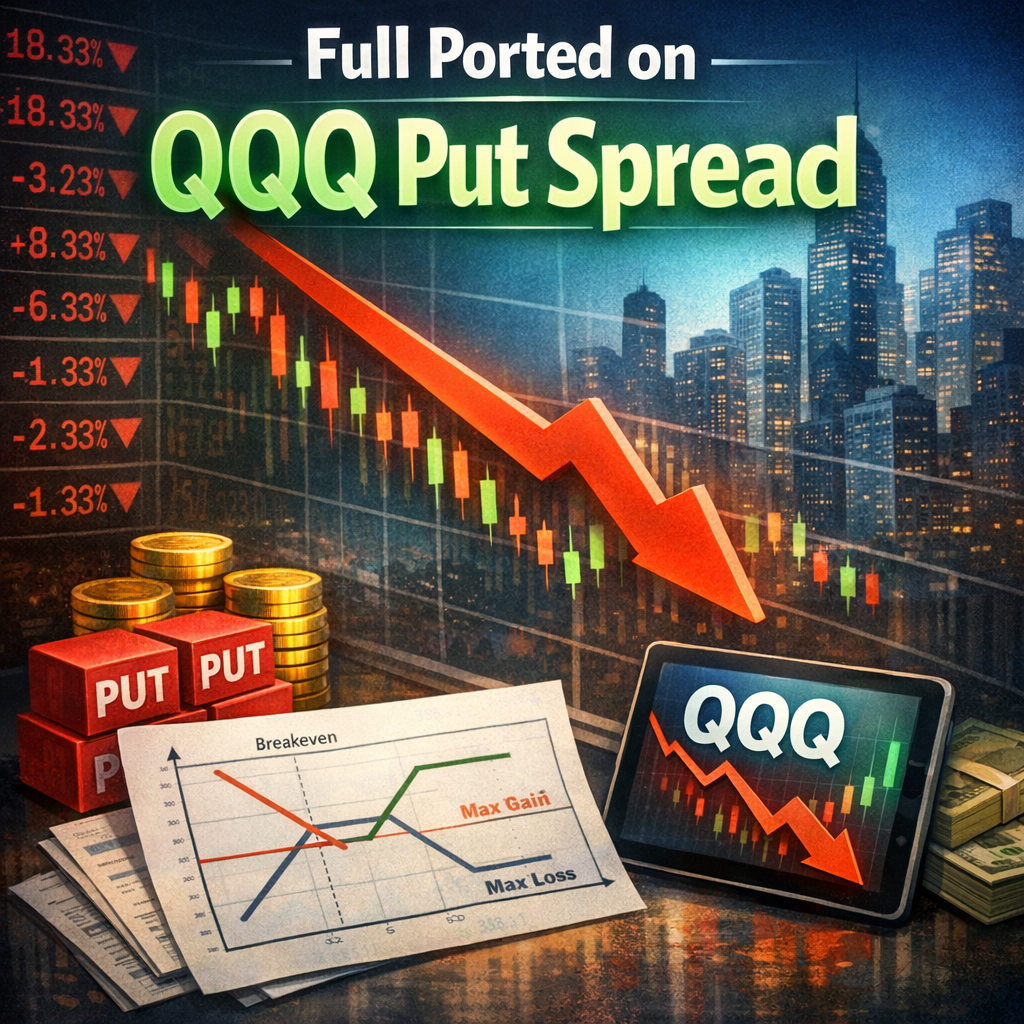
When Momentum Meets Caution in a Hype-Driven Market
Markets don’t move in straight lines—but every so often, they sprint. When hype, headlines, and herd behavior collide, traders are left with a choice: chase momentum or position for a reversal. In the wake of yet another AI-fueled rally—sparked by big tech headlines and amplified by market enthusiasm—some traders are choosing the latter, deploying bearish strategies to bet against what they see as overstretched valuations.
This article walks through one such approach: using a bear put spread to capitalize on a potential pullback in tech-heavy indices like QQQ. Along the way, we’ll break down how the strategy works, why timing and structure matter, and what insights experienced traders offer when refining this kind of trade. Whether you're new to options or looking to sharpen your edge, you'll come away with a clearer understanding of how to navigate high-volatility, sentiment-driven markets.
How a Bear Put Spread Works in Practice
A bear put spread is a defined-risk options strategy used when a trader expects a moderate decline in an asset’s price. It involves buying a put option at a higher strike price and simultaneously selling another put at a lower strike price, both with the same expiration date.
The appeal is straightforward: it reduces the upfront cost compared to buying a single put while still allowing for profit if the asset declines. The trade-off is capped profit potential, since gains are limited to the difference between the strike prices minus the premium paid.
In the scenario described, the trader established a bear put spread on QQQ, the ETF tracking the Nasdaq-100. The decision came after a sharp upward move driven by AI-related news—an environment where some see opportunity, but others see excess.
However, execution matters. Setting the short leg (the lower strike put sold) too close to the long leg can restrict potential gains if the market drops quickly. This is why the trader planned to “roll” the position—adjusting the short leg further down to allow more room for profit if QQQ declines.
Suggested visual: A payoff diagram showing maximum profit, loss, and breakeven points of a bear put spread.
Sentiment, Valuations, and the AI Hype Cycle
To understand the reasoning behind bearish positioning, it helps to look at sentiment. In recent months, AI-related stocks have surged, often pushing valuations to levels that spark debate. While innovation narratives drive enthusiasm, they can also lead to overextension.
Some traders point to signs of a maturing hype cycle: broader awareness of risks, increasing skepticism, and high-profile voices questioning sustainability. Mentions of large put positions by well-known investors, like Michael Burry, can further amplify this narrative—even if their exact intentions are more nuanced than headlines suggest.
At the same time, macroeconomic factors complicate the picture. Liquidity injections, central bank policy, and earnings expectations all contribute to market direction. For instance, if companies fail to justify lofty valuations with strong earnings growth, sentiment can shift quickly.
The key takeaway is that markets are driven by both fundamentals and psychology. When those two diverge, volatility often follows—and that’s where strategies like bear put spreads come into play.
Choosing the Right Instrument: QQQ, NDX, or Futures
One of the most valuable insights from experienced traders isn’t just about strategy—it’s about instrument choice. While QQQ options are widely used, some argue that index options like NDX can offer advantages, especially for larger trades.
NDX options track the same underlying index as QQQ but differ in structure. They are cash-settled, often come with favorable tax treatment in certain jurisdictions, and can reduce assignment risk. For high-value trades, they may also offer better commission efficiency depending on the broker.
Another alternative discussed is options on futures, such as those tied to Nasdaq futures (/NQ). These instruments provide extended trading hours and rapid settlement, but often come with higher fees and complexity.
The choice between QQQ, NDX, and futures options depends on several factors:
Trade size, commission structure, desired tax treatment, and trading hours all play a role. For example, a retail trader with a smaller account might prioritize simplicity and liquidity, while a larger trader might optimize for cost efficiency and tax advantages.
Suggested visual: A comparison chart highlighting differences between QQQ, NDX, and /NQ options (settlement type, trading hours, tax considerations).
Managing the Trade: Timing, Adjustments, and Risk
Options trading isn’t just about getting in—it’s about managing the position over time. In this case, the trader woke up to premarket gains due to intrinsic value changes as QQQ moved lower. While that’s a favorable outcome, it also introduces new decisions.
Should you take profits early, or hold for a larger move? Should you adjust the spread to capture more downside, or lock in gains?
Rolling the short leg is one common adjustment. This involves buying back the existing short put and selling a new one at a lower strike, extending the profit window. However, this also introduces new risks and costs, so it needs to be done thoughtfully.
Another consideration is expiration. Short-dated options can move quickly, offering rapid gains—but also rapid losses if the market reverses. Understanding how time decay (theta) and volatility impact pricing is essential for making informed decisions.
Suggested visual: A timeline showing how option value changes as expiration approaches under different market scenarios.
First, give your trade enough room to work. Setting strikes too close together can limit upside and reduce flexibility.
Second, match your strategy to your conviction. Bear put spreads are best suited for moderate declines—not catastrophic crashes. If you expect a major drop, other strategies may be more appropriate.
Third, pay attention to costs. Commissions, spreads, and slippage can eat into returns, especially when trading multi-leg options.
Fourth, understand your instrument. Whether you’re using QQQ, NDX, or futures options, each has unique characteristics that affect execution and outcomes.
Finally, don’t ignore sentiment—but don’t rely on it blindly either. Market narratives can shift quickly, and what feels like a crowded trade can become even more crowded before reversing.
Preparation and Perspective in Volatile Markets
Trading in a hype-driven market requires both conviction and discipline. The bear put spread offers a structured way to express a bearish view while limiting risk, making it a popular choice for traders anticipating a pullback.
However, success depends on more than just picking a direction. Instrument selection, strike placement, timing, and ongoing management all play critical roles. As the AI-driven rally continues to evolve, traders who combine strategic thinking with practical execution will be better positioned to navigate whatever comes next.
If there’s one takeaway, it’s this: markets reward preparation. Whether you’re betting on continued growth or positioning for a reversal, understanding your tools is what turns an idea into a well-executed trade.
For those looking to deepen their understanding, consider exploring educational resources from the Options Industry Council (OIC), CME Group materials on futures and options, and broker-specific guides on index options like NDX and SPX.
Books such as “Options as a Strategic Investment” by Lawrence McMillan and “Trading Options Greeks” by Dan Passarelli can provide deeper insights into strategy and risk management.
Additionally, following earnings reports, Federal Reserve announcements, and sentiment indicators can help contextualize market movements and inform future trades.