A Subtle Unease Beneath the Surface
Something feels off—and even if markets aren’t screaming it yet, people are starting to notice.
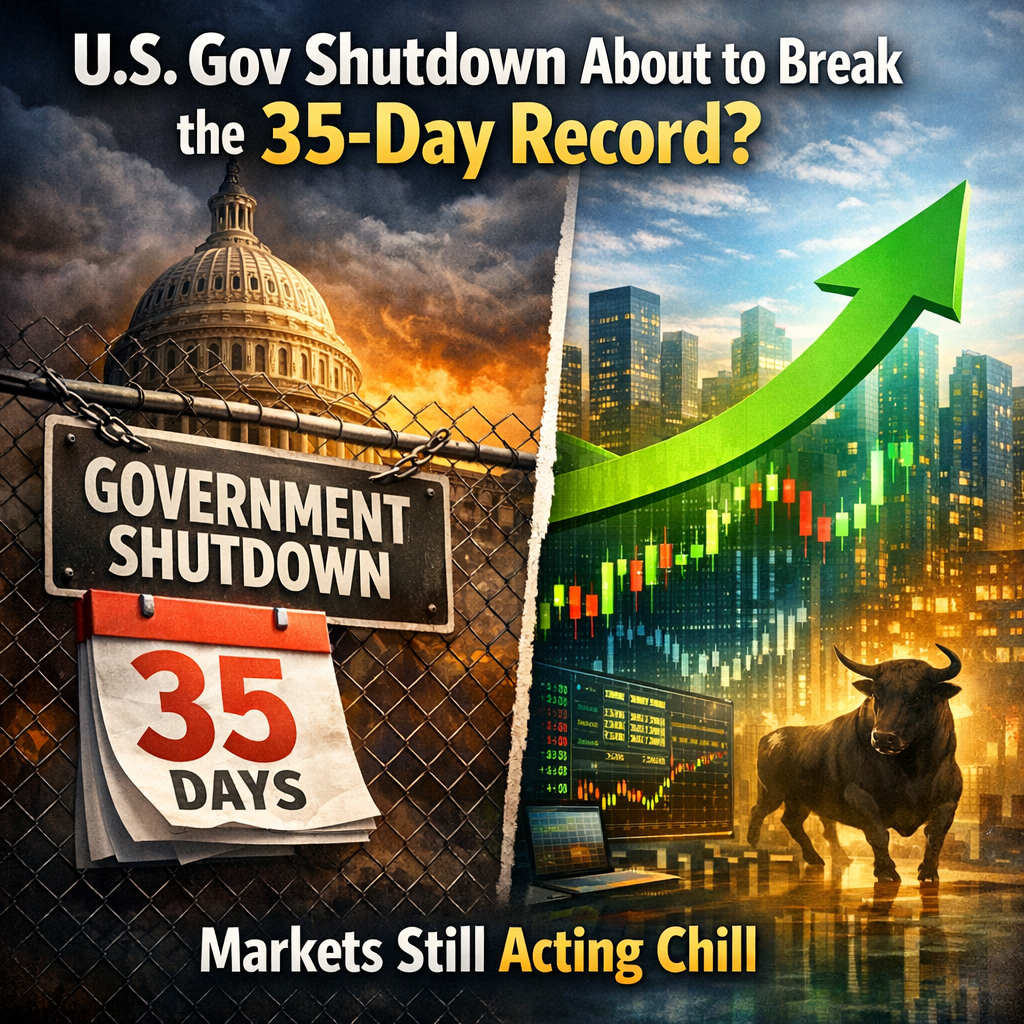
The United States is on the verge of breaking the record for the longest government shutdown in history, and unlike previous episodes, this one carries a different tone. The stock market remains relatively calm. Earnings reports are mixed. Consumer confidence is beginning to slip. And yet, beneath the surface, there’s a growing sense of unease.
This article explores why this shutdown feels different, what it could mean for the economy and everyday Americans, and how individuals can think about navigating the uncertainty. We’ll also look at structural forces—like inequality and political incentives—that may make this shutdown more prolonged and impactful than past ones.
By the end, you’ll have a clearer understanding of what’s happening, why markets haven’t reacted strongly (yet), and what practical steps you can take to prepare.
Why This Shutdown Feels Different
Government shutdowns are not new. Historically, markets have treated them as temporary political theater—unpleasant but ultimately resolved before lasting damage occurs. Investors tend to “look through” the noise, assuming a deal will eventually materialize.
But this time, several factors are converging to create a heavier atmosphere.
First, the nature of the shutdown itself is more comprehensive. In prior cases, partial agreements often kept key departments funded. This time, far more of the government is affected simultaneously, increasing the likelihood of real economic disruption as agency reserves begin to run dry.
Second, the political incentives to resolve the shutdown appear weaker than usual. When neither side benefits from compromise—or fears backlash more than stagnation—deadlock can persist longer than expected.
Third, there’s a growing sense that the consequences may not be easily reversible. Even if back pay is eventually issued, disruptions to services, workforce stability, and public trust can linger.
Imagine a contractor who misses weeks of income, or a federal worker who decides to leave public service altogether. Those effects don’t simply “reset” when funding resumes.
[Suggested visual: Timeline comparing past shutdown durations and scope]
The Market’s Calm—And What It Might Be Missing
One of the most puzzling aspects of the current situation is the market’s relative calm. Historically, markets react sharply to clear economic threats—but shutdowns often don’t trigger immediate panic.
Why?
Markets are forward-looking. Investors tend to assume that political dysfunction will eventually resolve itself. As long as corporate earnings remain stable and liquidity flows, short-term disruptions may be discounted.
But there are warning signs worth paying attention to.
Consumer confidence has started to weaken, which can be an early indicator of reduced spending. Earnings season has been mixed, suggesting that not all sectors are equally resilient. And prolonged uncertainty can slowly erode business investment decisions.
There’s also a structural disconnect at play. Stock market participation is concentrated among wealthier households, while the immediate effects of a shutdown—missed paychecks, disrupted benefits—hit lower-income Americans harder.
This creates a situation where markets can appear stable even as economic stress builds beneath the surface.
[Suggested visual: Chart showing stock market performance vs. consumer confidence during past shutdowns]
A Divided Economy and Uneven Impact
To understand why reactions to the shutdown vary so widely, it helps to look at the broader economic landscape.
The U.S. economy has increasingly been described as “K-shaped.” In simple terms, one segment of the population is doing very well—benefiting from asset growth, stock ownership, and stable employment—while another segment faces rising costs, job insecurity, and dependence on public programs.
This divide shapes how people experience a shutdown.
For higher-income households with investment portfolios, the immediate impact may be minimal. Markets haven’t dropped significantly, and long-term holdings remain intact.
For lower-income households, however, the effects can be immediate and severe. Delays in programs like SNAP (food assistance), disruptions to healthcare access, and missed wages can quickly translate into real hardship.
This divergence helps explain why some view the shutdown as “noise,” while others see it as a crisis in slow motion.
[Suggested visual: Infographic illustrating the K-shaped economic divide]
Gridlock, Ripple Effects, and Long-Term Risk
One of the most concerning aspects of the current shutdown is the apparent lack of urgency to resolve it.
In many past standoffs, political pressure—from voters, markets, or internal party dynamics—eventually forced compromise. But when political actors perceive greater risk in conceding than in holding firm, stalemates can persist.
There’s also a strategic dimension. Some policymakers view shutdowns as leverage to achieve longer-term goals, such as reducing the size of the federal workforce. If prolonged disruption leads to attrition—workers leaving due to instability—it can reshape institutions in lasting ways.
This raises an important question: what happens if the shutdown isn’t just a temporary breakdown, but part of a broader structural shift?
The longer it continues, the more secondary effects accumulate:
- Federal employees missing multiple pay cycles
- Contractors losing income with no guarantee of back pay
- Reduced economic activity from lower consumer spending
- Erosion of trust in public institutions
At a certain point, the impact becomes less about the shutdown itself and more about its ripple effects across the economy.
[Suggested visual: Flowchart showing cascading effects of prolonged shutdown]
Navigating Uncertainty with Clarity
So how should individuals interpret this moment?
It’s tempting to frame the situation in binary terms: either it’s just political noise, or it’s a looming crisis. The reality is more nuanced.
In the short term, markets may continue to shrug. But that doesn’t mean risks aren’t building.
A useful way to approach this is to separate time horizons:
Short-term: Volatility may remain low, especially if investors expect eventual resolution.
Medium-term: Economic data—consumer spending, employment, business investment—could begin to reflect the strain.
Long-term: Institutional and workforce impacts may persist even after funding resumes.
This layered perspective helps explain why some investors are staying invested while also increasing cash reserves or hedging risk.
If you’re wondering what to do, you’re not alone. While no one can predict exactly how this will unfold, there are sensible steps that can help you stay prepared without overreacting.
Maintain liquidity. Having extra cash on hand provides flexibility, whether for emergencies or investment opportunities.
Avoid drastic moves. Selling long-term investments based on short-term uncertainty can backfire, especially if markets remain stable.
Diversify exposure. Ensure your portfolio isn’t overly concentrated in sectors that could be sensitive to government disruption.
Monitor real-world indicators. Pay attention to consumer confidence, employment data, and spending trends—not just stock prices.
Plan for personal contingencies. If your income or benefits could be affected, take proactive steps to reduce financial vulnerability.
[Suggested visual: Checklist-style graphic summarizing preparedness steps]
For clarity, this is a place where a simple bullet-point checklist or table could help readers quickly review key actions.
This shutdown stands out not because of immediate panic, but because of its underlying tone. The market may be calm, but confidence is showing early cracks, and the broader economic divide is becoming more visible.
What makes this moment unique is the combination of political gridlock, structural inequality, and the possibility of longer-lasting effects on institutions and workers.
Whether this turns into a significant economic event or fades into another resolved standoff will depend on how long it persists—and how deeply it begins to affect everyday economic activity.
For now, the most rational approach isn’t panic or complacency, but awareness. Stay informed, stay flexible, and recognize that sometimes the most important shifts happen quietly before they become obvious.
References and Further Reading
For readers who want to explore further, consider reviewing:
- Congressional Budget Office (CBO) reports on past government shutdown impacts
- Federal Reserve data on consumer confidence and spending trends
- Historical analyses of U.S. government shutdowns from the Congressional Research Service (CRS)
- Research on wealth inequality and “K-shaped” economic recovery trends from institutions like the Brookings Institution and Pew Research Center
These sources can provide deeper context and help you track how the situation evolves in the coming weeks.