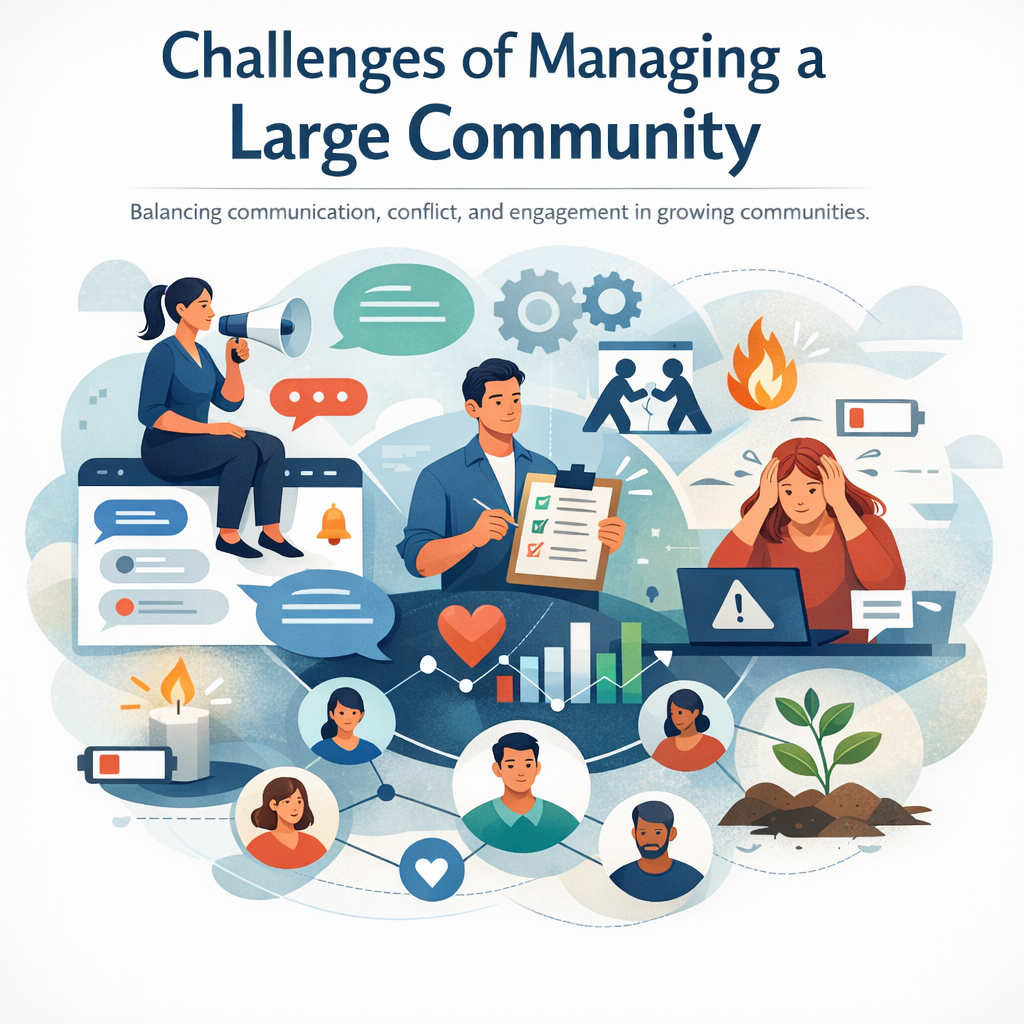
The evolving nature of growing communities
Communities have always been at the heart of human connection, but managing a large one—whether online or offline—comes with a unique set of challenges that can quickly become overwhelming. What starts as an exciting space for shared ideas and collaboration can evolve into a complex ecosystem of personalities, expectations, and conflicts. Understanding how to navigate this complexity is essential for anyone tasked with leading or supporting a growing community.
Growth brings complexity
As a community expands, its dynamics shift in ways that aren’t always predictable. A small group often operates on trust and familiarity, but as new members join, that sense of closeness can dilute. With growth comes diversity in opinions, backgrounds, and behavior, which can enrich the community but also create friction.
For example, an online forum that began as a niche interest group might attract a wider audience over time. While this broadens perspectives, it can also lead to disagreements about the community’s purpose or tone. Balancing inclusivity with maintaining the original vision becomes a delicate task.
Communication and conflict at scale
Maintaining clear communication
In large communities, communication can easily become fragmented. Messages get lost, misunderstandings spread, and important updates may not reach everyone. This is especially true in digital spaces where conversations happen across multiple channels.
Leaders often struggle to ensure that everyone feels informed and heard. Without clear communication strategies, members may feel disconnected or undervalued. A lack of transparency can also lead to mistrust, particularly when decisions are made without visible input from the community.
Managing conflict and moderation
Conflict is inevitable in any group, but in large communities, it can escalate quickly. Differences in opinion, cultural misunderstandings, or even simple miscommunication can spark disputes. Without effective moderation, these conflicts can spiral and harm the overall environment.
Consider social media groups where heated debates can turn into personal attacks. Moderators must strike a balance between allowing open discussion and enforcing rules that protect members. This requires not only clear guidelines but also consistency in how they are applied.
Sustaining leadership and member engagement
Preventing burnout among leaders
Behind every thriving community is a team of people dedicating time and energy to keep it running smoothly. As the community grows, so does the workload. Responding to messages, resolving conflicts, organizing events, and maintaining engagement can become a full-time responsibility.
Many community managers experience burnout because they feel responsible for everyone’s experience. Without proper support or boundaries, this pressure can lead to exhaustion and decreased effectiveness. In volunteer-driven communities, this challenge is even more pronounced.
Keeping members engaged
Engagement is the lifeblood of any community, but sustaining it at scale is no easy task. What worked for a small group—casual conversations or occasional events—may not be enough to keep a larger audience interested.
Members can become passive if they don’t feel a sense of belonging or value. For instance, in large online communities, a small percentage of users often generate most of the content, while others remain silent observers. Encouraging broader participation requires intentional effort and creativity.
Practical strategies for effective management
Practical ways to manage a large community effectively
While the challenges are significant, there are practical steps that can make managing a large community more sustainable. Establishing clear guidelines early on helps set expectations and reduces ambiguity. These guidelines should be easy to understand and consistently enforced.
Delegation is equally important. Building a team of moderators or community leaders allows responsibilities to be shared, preventing burnout and ensuring faster responses to issues. In many successful communities, leadership is distributed rather than centralized.
Regular communication also plays a key role. Updates, announcements, and open discussions help members feel informed and involved. Creating spaces for feedback—such as surveys or dedicated discussion threads—can strengthen trust and give members a voice in shaping the community.
To boost engagement, consider organizing events, discussions, or challenges that encourage participation. Highlighting member contributions can also foster a sense of recognition and belonging. Even small gestures, like acknowledging active members, can make a difference.
Finally, leveraging technology can ease many management tasks. Tools for moderation, analytics, and communication can streamline processes and provide insights into what’s working and what isn’t. However, these tools should complement, not replace, genuine human interaction.
Balancing structure with human connection
Finding balance in a growing ecosystem
Managing a large community is as much about people as it is about systems. It requires adaptability, empathy, and a willingness to evolve alongside the community itself. Challenges will always arise, but they also present opportunities to strengthen connections and refine leadership approaches.
By understanding the complexities of growth, prioritizing clear communication, and implementing thoughtful strategies, community leaders can create environments where members feel valued and engaged. The effort invested in managing these spaces pays off in the form of vibrant, supportive communities that thrive over time.