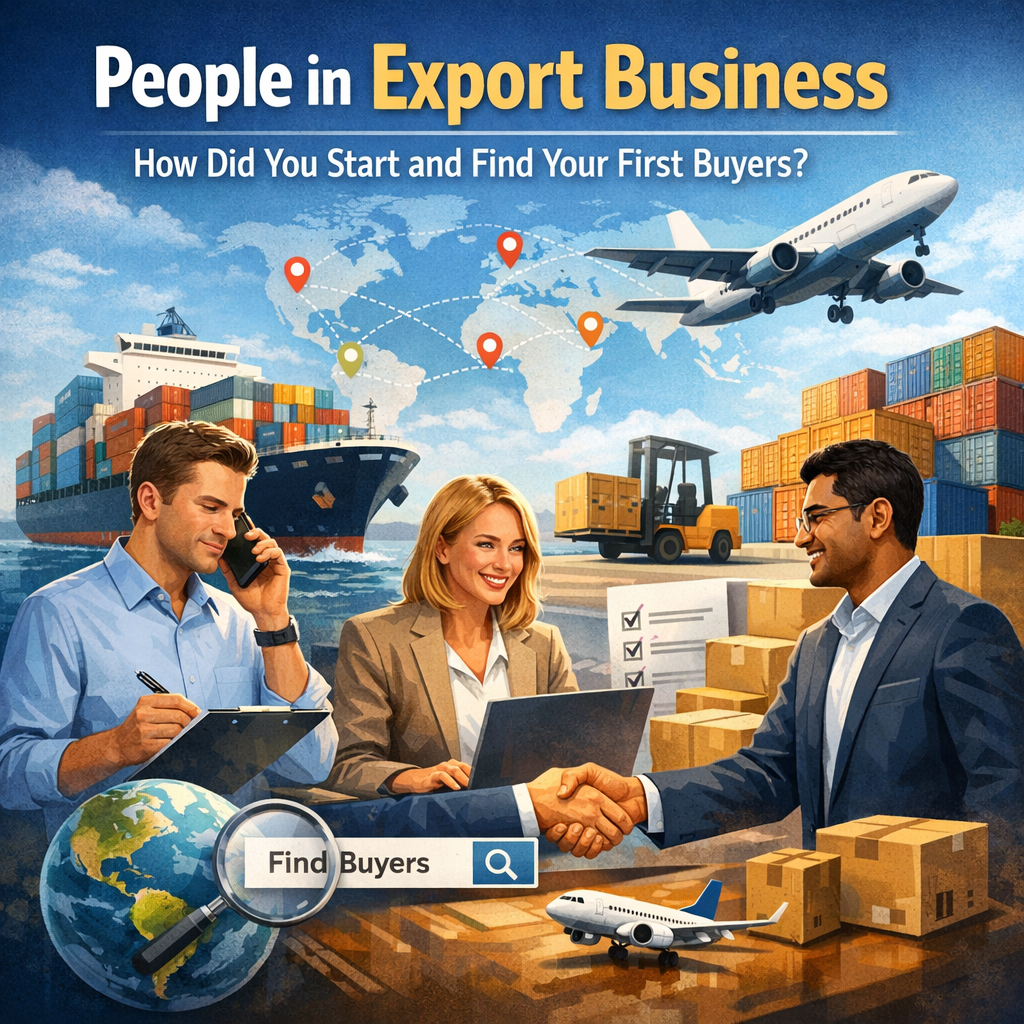
Getting Started in Exporting: From Idea to Opportunity
Starting an export business often begins with a simple question: what should I sell—and to whom? It’s an exciting space, full of global opportunities, but also filled with uncertainty for beginners. The good news is that many successful exporters started exactly where you are now—curious, cautious, and eager to learn from real-world experience rather than theory.
In this article, we’ll walk through how seasoned exporters chose their first product, found their first international buyers, and decided between trading and manufacturing. We’ll also explore common beginner mistakes and share practical advice to help you build a sustainable, long-term export business.
Whether you’re just exploring the idea or ready to take your first step, this guide will help you move forward with clarity and confidence.
Choosing the Right Product for Export Success
One of the most important early decisions is selecting the right product. Many first-time exporters assume they need something unique or highly innovative, but experienced exporters often take a more practical route.
In reality, successful first products are often chosen based on three factors: local availability, existing demand in international markets, and ease of logistics. For example, an exporter in India might start with spices or textiles because they are abundant locally and already in demand globally. Similarly, someone in Vietnam might focus on coffee or handicrafts.
A common approach is to start by researching export data and trends. Platforms like ITC Trade Map or government export reports can reveal which products are already being exported successfully from your region. This reduces risk because you’re entering a proven market rather than trying to create one from scratch.
Another useful strategy is to look at your existing network. Many exporters began by leveraging connections—friends, family, or business contacts abroad—who could validate demand or even become initial buyers.
Consider including a chart here showing “High-demand export categories by region” to help readers visualize opportunities.
How to Find and Win Your First International Buyers
Finding your first buyer is often the most challenging—and most rewarding—part of the journey. Exporters typically don’t land large clients immediately; instead, they build relationships step by step.
Many beginners start with online B2B platforms like Alibaba, Global Sources, or TradeIndia. These platforms allow you to list products and connect with international buyers actively looking for suppliers. While competition can be intense, they offer a relatively low-cost entry point.
Another proven method is direct outreach. This involves identifying potential buyers—such as distributors, wholesalers, or retailers—and contacting them via email or LinkedIn. The key is personalization. Generic messages rarely work, but a short, tailored introduction explaining how your product fits their market can open doors.
Trade fairs and exhibitions are also powerful. Even attending as a visitor can help you understand market expectations and connect with potential buyers. Many exporters report that their first serious deals came from in-person interactions where trust could be established quickly.
A simple step-by-step process for finding buyers could include researching target markets, building a contact list, crafting outreach messages, and following up consistently. This could be illustrated with a flow diagram for clarity.
Trading vs Manufacturing: Choosing Your Starting Point
One of the most debated questions among new exporters is whether to start as a trader or a manufacturer. While manufacturing offers higher margins in the long run, it also requires significant investment, infrastructure, and operational complexity.
Most experienced exporters recommend starting with trading. As a trader, you act as a middleman—sourcing products from local suppliers and selling them to international buyers. This approach allows you to:
Test demand without heavy upfront investment
Learn about logistics, documentation, and regulations
Build relationships with buyers and suppliers
Understand pricing dynamics in global markets
Once you’ve established consistent demand and gained experience, you can consider moving into manufacturing or private labeling. This transition allows for better control over quality and branding, which can significantly increase profitability.
A case study example could be useful here: many small exporters in countries like Turkey and China started as traders before evolving into full-scale manufacturers after identifying stable demand.
Avoiding Common Pitfalls and Building for the Long Term
Exporting can be rewarding, but it’s also unforgiving if you overlook key details. Many beginners make similar mistakes, often due to lack of experience or rushing into deals.
One common mistake is underestimating logistics and documentation. Exporting involves paperwork such as invoices, packing lists, certificates of origin, and customs documentation. Errors here can delay shipments or even result in financial losses.
Another frequent issue is poor pricing strategy. New exporters sometimes price too low to win deals, only to realize later that they’ve overlooked costs like shipping, duties, or currency fluctuations.
Trust is another critical factor. Entering agreements without proper verification of buyers or suppliers can lead to scams or non-payment. Using secure payment methods like letters of credit or working with verified partners can reduce risk.
Finally, many beginners try to scale too quickly. Taking on large orders without the capacity to deliver can damage your reputation early on. It’s better to start small, deliver consistently, and grow steadily.
An infographic showing “Top 5 Export Mistakes and How to Avoid Them” would be helpful in this section.
Focus on consistency over quick wins. Long-term success in exporting comes from repeat business and strong relationships, not one-off deals.
Invest time in understanding your target market’s culture, regulations, and preferences. What works in one country may not work in another.
Keep improving your product and service quality. Feedback from early buyers is invaluable—use it to refine your offering.
Build a professional online presence. A simple website and credible communication can significantly boost trust with international buyers.
Stay informed about trade policies, tariffs, and global trends. Exporting is influenced by economic and political changes, so staying updated is crucial.
Where appropriate, a checklist-style visual could help readers track these steps as they build their business.
Starting an export business is less about having the perfect idea and more about taking informed, consistent action. Choosing the right product, finding your first buyer, and deciding how to structure your business are all part of a learning process that evolves over time.
The experiences of seasoned exporters show that success doesn’t come from avoiding mistakes entirely—it comes from learning quickly, adapting, and building strong relationships along the way.
If you’re serious about building something long-term, start small, stay curious, and focus on delivering value. The global market is vast, and there’s room for those willing to approach it thoughtfully.
Resources to Deepen Your Export Knowledge
International Trade Centre (ITC) – Trade Map for export data and market analysis
Export.gov – Guides on export regulations and market entry strategies
World Bank – Reports on global trade trends and opportunities
Books such as “Export/Import Procedures and Documentation” by Thomas E. Johnson
Online platforms like Alibaba, Global Sources, and government export promotion agencies for practical exposure
Exploring these resources can deepen your understanding and help you make more informed decisions as you begin your export journey.