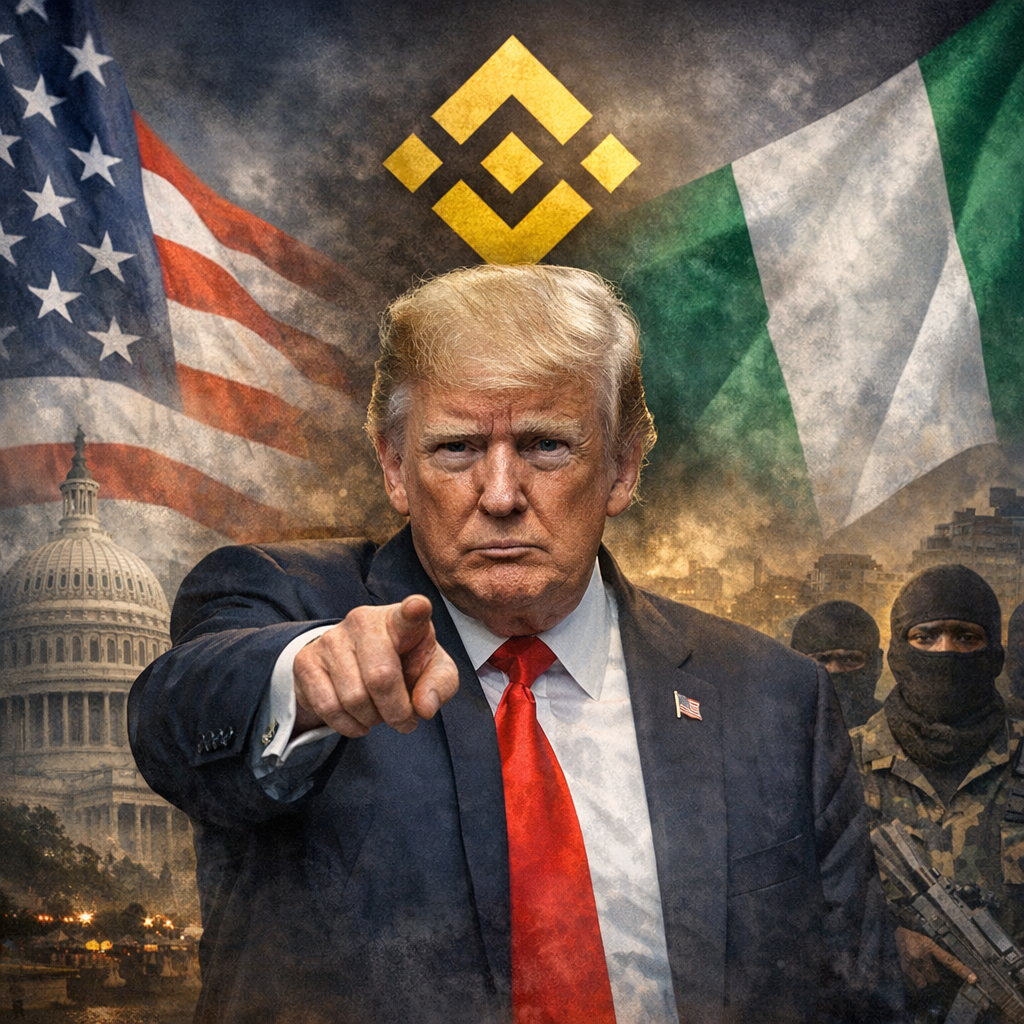
A Dispute That Escalated Beyond Finance
Global finance rarely unfolds in neat, predictable ways—but every so often, a story comes along that perfectly captures just how tangled things can get. What started as a regulatory dispute involving a crypto exchange in Nigeria has now spiraled into a mix of political threats, viral social media claims, and accusations of extortion at the highest levels. With former U.S. President Donald Trump weighing in, Binance’s former CEO CZ amplifying the controversy, and a detained executive making explosive allegations, the situation has evolved into a case study in how crypto, law, and geopolitics collide.
This article breaks down what actually happened, why it matters, and what it signals for the future of cryptocurrency in emerging markets. You’ll also learn practical steps for protecting yourself or your business when operating across multiple jurisdictions in an increasingly complex regulatory landscape.
The Incident That Sparked It All
The controversy centers around Tigran Gambaryan, a former Binance executive who was detained in Nigeria in 2024. Nigerian authorities arrested Gambaryan and a colleague as part of an investigation into Binance’s operations, particularly around allegations of money laundering and currency manipulation. While his colleague reportedly left the country, Gambaryan remained and faced legal proceedings that would stretch on for months.
The case quickly gained international attention. A coalition of 18 U.S. state attorneys general urged the White House to classify Gambaryan as a hostage, arguing that his detention was politically motivated. Nigeria, however, firmly rejected this characterization, maintaining that Gambaryan was subject to due legal process and received appropriate medical care during his detention.
After approximately eight months in custody, Nigerian authorities dropped the charges in October 2024, citing humanitarian grounds. While this might have closed the chapter, it instead became the starting point for a much broader and more contentious debate.
[Suggested visual: Timeline infographic showing key events from arrest to release]
Politics, Public Reactions, and Narrative Clashes
The situation escalated dramatically when Donald Trump posted on Truth Social, threatening to cut aid to Nigeria and even hinting at potential military consequences over alleged religious persecution. While these claims were not directly tied to the Gambaryan case, they added a volatile political layer to an already sensitive issue.
Shortly after, Changpeng Zhao (CZ), Binance’s former CEO, entered the conversation. In a now-deleted post, CZ accused Nigeria of effectively “kidnapping” Gambaryan, reigniting debate about the legitimacy of the arrest and the country’s legal framework.
The response from Nigerians was swift and forceful. Many pushed back against the characterization, emphasizing national sovereignty and the right of any country to enforce its laws—especially when it comes to financial activity within its borders. Critics argued that labeling a legal arrest as “kidnapping” oversimplified a complex legal and regulatory issue.
This exchange highlights a growing reality: crypto disputes are no longer confined to tech forums or financial circles. They now intersect with national identity, political narratives, and international diplomacy.
[Suggested visual: Social media sentiment chart showing reactions to CZ’s post]
Allegations, Uncertainty, and Competing Perspectives
Just as the situation seemed to stabilize, Gambaryan himself introduced a new twist. He publicly alleged that Nigerian officials demanded $50 million from the U.S. government in exchange for his release—an accusation that, if substantiated, would significantly alter the narrative.
Nigeria has not accepted these claims, and the truth remains contested. What’s clear, however, is that multiple narratives are now competing for legitimacy:
One side frames the detention as lawful enforcement of financial regulations. Another portrays it as political leverage or even coercion. A third sees it as a cautionary tale about operating in jurisdictions where regulatory frameworks are still evolving.
This kind of ambiguity is not uncommon in international disputes, especially when financial technologies outpace legal systems. Without transparent, universally accepted standards, cases like this often devolve into competing interpretations rather than clear-cut conclusions.
[Suggested visual: Comparison chart outlining claims from each party]
Crypto’s Expanding Role in Global Power Dynamics
Nigeria is one of Africa’s largest cryptocurrency markets, driven by a young, tech-savvy population and persistent currency instability. For many Nigerians, crypto is not just an investment—it’s a practical tool for preserving value and facilitating cross-border transactions.
However, this widespread adoption has also made the country a focal point for regulatory scrutiny. Authorities have expressed concerns about capital flight, tax evasion, and the impact of crypto trading on the national currency. Binance, one of the world’s largest exchanges, found itself at the center of this tension and eventually suspended naira trading amid mounting pressure.
The Gambaryan case underscores a broader trend: crypto companies are increasingly entangled in national policy debates. What might begin as a compliance issue can quickly escalate into a geopolitical flashpoint, especially when international actors get involved.
For businesses operating in this space, the lesson is clear—regulatory risk is no longer just a legal concern; it’s a strategic one.
[Suggested visual: Map highlighting global crypto regulatory hotspots]
Managing Risk in a Fragmented Regulatory World
If you’re involved in crypto trading, investing, or running a business across multiple countries, this situation offers valuable lessons. The key is not to avoid risk entirely—that’s impossible—but to manage it intelligently.
Start by maintaining clean, jurisdiction-specific records of all transactions. This means clearly tagging where funds originate, where they move, and which fiat on-ramps or off-ramps are used. In the event of an audit or regulatory inquiry, this level of detail can make a significant difference.
Next, stay informed about local regulations in every market you operate in. Laws can change quickly, especially in emerging economies where governments are still figuring out how to handle crypto. Relying on outdated assumptions can expose you to unnecessary risk.
It’s also wise to diversify operational exposure. If your entire business depends on a single jurisdiction, you’re more vulnerable to sudden regulatory shifts. Spreading activity across multiple compliant regions can provide a buffer.
Finally, consider using specialized tools or platforms that help track and organize multi-country crypto activity. These can simplify compliance and reduce the likelihood of being caught off guard during audits.
[Suggested visual: Workflow diagram for tracking cross-border crypto transactions]
What This Signals for the Future
The unfolding situation involving Nigeria, Binance, and Tigran Gambaryan is more than just a headline—it’s a glimpse into the future of global finance. As cryptocurrency continues to blur the lines between technology, money, and sovereignty, conflicts like this are likely to become more common.
What makes this case particularly instructive is the way it combines legal ambiguity, political rhetoric, and personal testimony into a single narrative. It shows how quickly a regulatory issue can escalate into an international controversy—and how difficult it can be to separate fact from framing once it does.
For individuals and businesses alike, the takeaway is simple: the crypto world doesn’t operate in a vacuum. It’s deeply connected to the legal and political systems of the real world, and navigating it requires awareness, preparation, and adaptability.
As this story continues to evolve, staying informed and proactive will be key. Because in a landscape where finance meets geopolitics, the stakes are only getting higher.
References and Further Reading
For readers interested in exploring this topic further, consider looking into reports from international financial watchdogs such as the Financial Action Task Force (FATF), as well as regional analyses from organizations like the Brookings Institution or the Atlantic Council.
News coverage from reputable outlets including Reuters, Bloomberg, and the Financial Times can also provide ongoing updates and multiple perspectives on the situation.
Additionally, research on crypto adoption in emerging markets—particularly in Africa—can offer valuable context for understanding why countries like Nigeria play such a pivotal role in the global digital asset ecosystem.