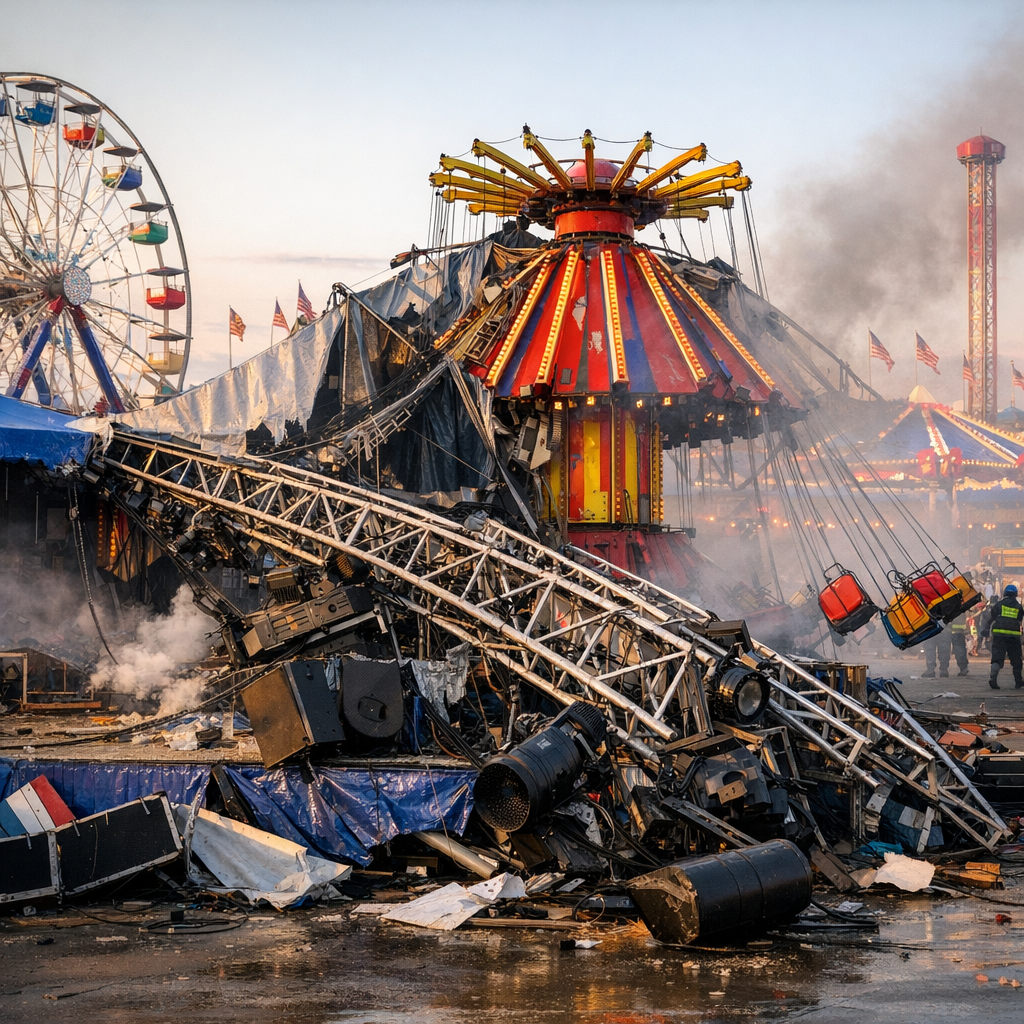
A Frightening Incident and What It Signals
“Absolutely terrifying” is how one witness described a recent incident involving a large public event stage in Washington, D.C. While details continue to emerge, early accounts suggest that a structural element—possibly part of a stage façade—became dislodged, raising serious concerns about safety standards at large-scale public gatherings. Moments like this are more than just viral clips or alarming anecdotes; they highlight the often invisible but critical systems that keep crowds safe.
In this article, we’ll unpack what likely happened, why incidents like this occur, and what it reveals about event safety planning. You’ll also learn how large temporary structures are supposed to be built and inspected, and what both organizers and attendees can do to reduce risks at public events.
What Likely Went Wrong
Based on eyewitness commentary and technical speculation, the incident appears to involve a piece of stage façade—possibly a decorative panel attached above an LED wall—coming loose. One plausible explanation is that the panel made unintended contact with rigging components such as cables or truss systems, leading to it being torn away.
Temporary stages, especially those built for major events like Independence Day celebrations, are complex assemblies. They combine structural frames, lighting rigs, sound systems, and decorative elements. Each component must be carefully integrated. When even a small part is improperly secured or interacts unpredictably with another element, the results can be dangerous.
It’s also important to clarify that this stage was reportedly part of a separate “Salute to America” event near the WWII Memorial, not the nearby state fair installation, though early reports confused the two. This distinction matters because different organizers, contractors, and safety protocols may have been involved.
[Suggested visual: Diagram of a typical outdoor stage setup labeling truss, LED wall, façade panels, and rigging components.]
The Complexity Behind Temporary Structures
To the average attendee, a concert stage or festival installation might look like a simple platform with lights and screens. In reality, these structures are engineering projects that must account for weight distribution, wind loads, electrical systems, and crowd safety.
Temporary structures are often assembled quickly—sometimes in just a few days—using modular components. This speed introduces risk if oversight is lacking. Proper construction should include:
Careful load calculations to ensure that every beam and connection can handle the combined weight of equipment and environmental forces.
Rigorous inspection of all connections, especially where decorative elements attach to structural components.
Clear separation between functional systems (like rigging) and non-structural elements (like panels or branding features).
When these standards are compromised—whether due to time pressure, cost-cutting, or poor coordination—the likelihood of failure increases.
[Suggested visual: Checklist-style infographic showing “What makes a stage safe?”]
Broader Signs of Planning Gaps
Comments from attendees at nearby installations painted a broader picture of potential organizational issues. Reports of inadequate air conditioning in extreme heat, lack of shade, and absence of water stations suggest that basic planning considerations may have been overlooked.
While these issues may seem unrelated to structural safety, they often share a common root: insufficient planning, budgeting, or oversight. Events that cut corners on attendee comfort may also be more likely to compromise on behind-the-scenes safety measures.
There’s also speculation that some installations may not have gone through competitive bidding processes. While not inherently unsafe, lack of competitive oversight can reduce accountability and quality control.
Real-world examples reinforce this concern. Past incidents—such as stage collapses at music festivals due to wind or improper assembly—have shown that even experienced crews can make critical errors under pressure.
[Suggested visual: Timeline of notable stage or event structure failures and their causes.]
How Safety Oversight Is Meant to Work
Large public events in the United States are typically governed by a combination of local regulations, national safety standards, and industry best practices. These include guidelines from organizations like OSHA (Occupational Safety and Health Administration) and ANSI (American National Standards Institute).
Key safety measures should include pre-event inspections by qualified engineers or inspectors.
Wind and weather monitoring, especially for outdoor stages.
Clear documentation of load limits and structural designs.
Emergency response plans in case something goes wrong.
However, enforcement can vary depending on the jurisdiction and the nature of the event. Public events tied to holidays or government celebrations may involve multiple agencies, which can complicate accountability.
[Suggested visual: Flowchart showing how event safety approval and inspection processes work.]
Staying Safe and Moving Forward
For event organizers, the lesson is straightforward but critical: safety must be prioritized at every stage of planning and execution. This includes hiring experienced contractors, conducting thorough inspections, and resisting the temptation to cut costs on essential systems.
Attendees also play a role in their own safety. While you can’t control how an event is built, you can stay aware of your surroundings. If you notice loose structures, swaying components, or overcrowding near stages, it’s wise to move to a safer area.
In extreme weather conditions, such as the 100+ degree heat reported at nearby installations, hydration and shade are not luxuries—they’re necessities. A lack of these basic provisions can signal broader organizational shortcomings.
[Suggested formatting: A short bullet list summarizing “What to watch for at public events” could be added here for quick reference.]
Incidents like this are unsettling, but they serve an important purpose: they expose vulnerabilities that might otherwise go unnoticed. Whether caused by a single faulty panel or deeper systemic issues, structural failures at public events are preventable with proper planning, expertise, and oversight.
As cities continue to host large-scale gatherings, the demand for safe, well-managed infrastructure will only grow. Organizers must treat safety as a non-negotiable priority, not an afterthought. And attendees should remain informed and vigilant, especially in crowded or complex environments.
Ultimately, public events are meant to bring people together in celebration—not put them at risk. Ensuring that goal requires attention to detail, accountability, and a commitment to doing things the right way.
References and Further Reading
For those interested in learning more about event safety and structural standards, consider exploring resources from OSHA (Occupational Safety and Health Administration), ANSI guidelines for temporary structures, and the Event Safety Alliance Guide. Case studies of past stage collapses and safety audits can also provide valuable insights into what can go wrong—and how to prevent it.