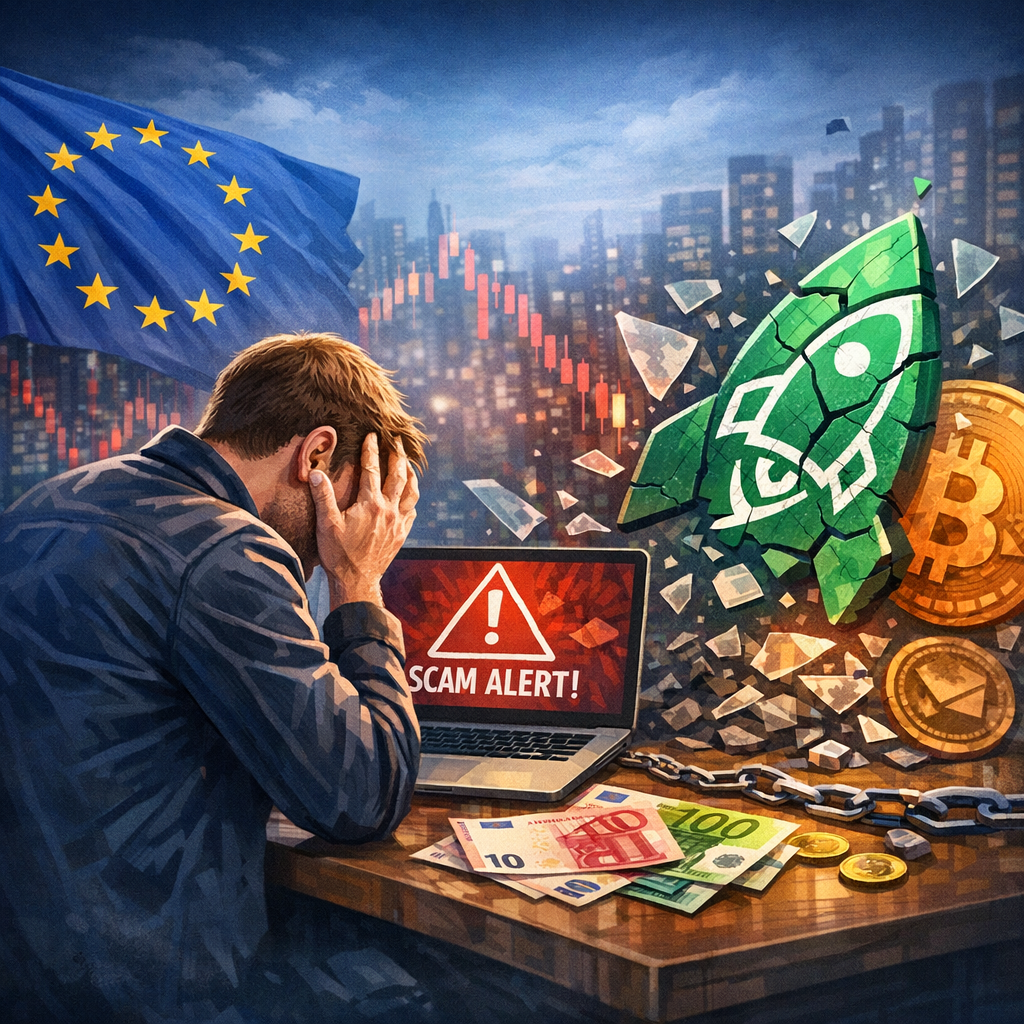
A Real-World Dispute and Why It Raises Red Flags
When a crypto platform freezes your funds, the experience can feel like shouting into a void—especially when support replies sound automated and months turn into years. That’s not just frustrating; in some cases, it may raise serious legal and regulatory questions. This article explores a real-world dispute involving a delayed crypto release, examines what EU consumer and data protection law says about such situations, and explains what affected users can do when platforms stop responding.
By the end, you’ll understand how AML/KYC policies are supposed to work, what “reasonable time” actually means in practice, how regulatory status matters for crypto companies operating in the EU, and what concrete steps you can take if your funds are stuck.
The Case: A Prolonged AML Review and Regulatory Concerns
At the center of this situation is a user who has been waiting since 2022 for the release of 1 ETH held by a crypto service provider under “AML review.” Despite repeated follow-ups, the company allegedly provided only template responses without substantive updates.
In November 2025, the user escalated the matter formally, invoking EU consumer law and GDPR Articles 15 (right of access) and 22 (automated decision-making). Still, no meaningful response was received.
What adds complexity is confirmation from Lithuania’s Financial Crime Investigation Service (FNTT) stating that the company’s EU-facing entity is not registered or supervised as a Virtual Asset Service Provider (VASP) in Lithuania. This raises a critical question: can a company claim AML/KYC compliance while lacking formal regulatory status in the jurisdiction it operates from?
This case highlights a broader issue affecting crypto users across Europe—what happens when compliance is cited as a reason for holding funds, but transparency and accountability appear to be missing?
Suggested visual: A timeline graphic showing key dates (2022 hold → 2025 escalation → regulatory confirmation).
Where AML/KYC Ends and Consumer Rights Begin
Anti-Money Laundering (AML) and Know Your Customer (KYC) procedures are essential safeguards in financial systems, including crypto. Companies use them to verify identities and detect suspicious activity. However, these obligations are not unlimited in scope or duration.
Most platforms explicitly state in their policies that verification will be completed “within a reasonable time.” While “reasonable” is not always precisely defined, two years is widely considered excessive under both consumer protection standards and general principles of fairness.
From a legal perspective, several frameworks come into play:
First, EU consumer law requires that services be delivered as described and without undue delay. If a platform advertises efficient compliance processes but fails to act within a reasonable timeframe, this could be seen as misleading.
Second, GDPR introduces additional obligations. Article 15 grants users the right to access their data and understand how decisions are made. Article 22 restricts decisions based solely on automated processing when they significantly affect individuals—such as freezing funds.
If a company neither explains its decision nor provides a timeline, it may be falling short of these requirements.
Suggested visual: A simple flowchart explaining how AML/KYC reviews should progress versus what happens when delays occur.
Why Regulatory Status Changes Everything
In the European Union, crypto service providers operating within a member state are typically required to register as Virtual Asset Service Providers (VASPs) with local authorities. This ensures oversight, accountability, and adherence to AML directives.
In this case, confirmation from Lithuania’s FNTT indicates that the company’s EU entity is not registered or supervised as a VASP. This creates a potential contradiction: the company promotes AML/KYC compliance aligned with EU and FATF standards, yet may lack formal authorization in the jurisdiction it operates from.
This distinction is crucial. Marketing language about “implementing FATF recommendations” is not the same as being regulated. If consumers are led to believe a company is fully compliant when it is not, this could fall under the EU Unfair Commercial Practices Directive (2005/29/EC).
In practical terms, regulatory status affects:
• Whether authorities can intervene directly
• The legal remedies available to consumers
• The credibility of compliance claims
Without oversight, users may find it harder to resolve disputes through traditional regulatory channels.
Suggested visual: A comparison chart showing “regulated VASP” vs. “unregistered entity” and what protections apply.
Escalation Paths That Can Break the Silence
When a crypto platform stops responding, many users assume their only option is to wait or give up. That’s not the case. The EU provides several structured escalation mechanisms that can apply even in cross-border disputes.
One key avenue is ECC-Net (European Consumer Centres Network). This service helps mediate disputes between consumers and companies across EU countries. Filing a complaint is free and often prompts companies to respond more seriously.
Another route is through data protection authorities. If a company ignores GDPR requests—such as access to data or explanations of automated decisions—you can file a complaint with your national authority or the relevant authority in the company’s jurisdiction (e.g., Lithuania’s VDAI).
In this case, escalation included both ECC-Net and data protection authorities, reflecting a strategic approach: combining consumer law and privacy law pressure.
If these steps fail, legal action becomes a possibility. Claims could potentially involve:
• Breach of contract (failure to deliver funds)
• Misleading commercial practices
• GDPR violations
While litigation is more complex, the existence of documented communication and regulatory references significantly strengthens a case.
Suggested visual: A step-by-step escalation ladder showing increasing levels of action (support → formal notice → ECC-Net → regulator → legal action).
Practical Steps and the Bigger Picture
If you’re dealing with a similar situation, documentation and persistence are your strongest tools. Start by saving every interaction—emails, timestamps, ticket numbers, and policy references.
When communicating with the company, quote their own AML/KYC policy, especially any language about “reasonable time.” This frames your request within their stated obligations rather than vague expectations.
Set clear deadlines in your messages. For example, give 14 days for a substantive response before escalating. This creates a documented trail showing you acted reasonably.
If there’s no reply, file with ECC-Net. It’s straightforward and often triggers more serious engagement from companies.
At the same time, consider submitting a GDPR complaint. This can be done online in minutes and introduces regulatory scrutiny that companies cannot easily ignore.
Finally, keep your communication factual and structured. Avoid emotional language—focus on timelines, obligations, and specific requests.
Suggested formatting note: This section could be presented as a numbered checklist for clarity in a published version.
This situation is not just about one delayed transaction—it reflects broader tensions in the crypto industry between compliance, transparency, and consumer rights.
AML/KYC procedures are necessary, but they cannot become indefinite justifications for withholding funds without explanation. Likewise, marketing claims about compliance must align with actual regulatory status.
For users, the key takeaway is that silence from a company does not mean you are out of options. EU frameworks provide multiple pathways to challenge delays, demand transparency, and escalate disputes.
If more consumers document their cases and use these mechanisms, it increases pressure on platforms to improve accountability across the industry.
References and Further Reading
For those who want to explore further, consider reviewing:
• EU Directive 2005/29/EC on Unfair Commercial Practices
• General Data Protection Regulation (GDPR), especially Articles 15 and 22
• FATF guidance on virtual assets and service providers
• European Consumer Centres Network (ECC-Net) official website
• Lithuanian Financial Crime Investigation Service (FNTT) publications
• National Data Protection Authorities such as Lithuania’s VDAI
These resources provide a deeper understanding of your rights and the obligations companies must meet when operating in the EU crypto space.