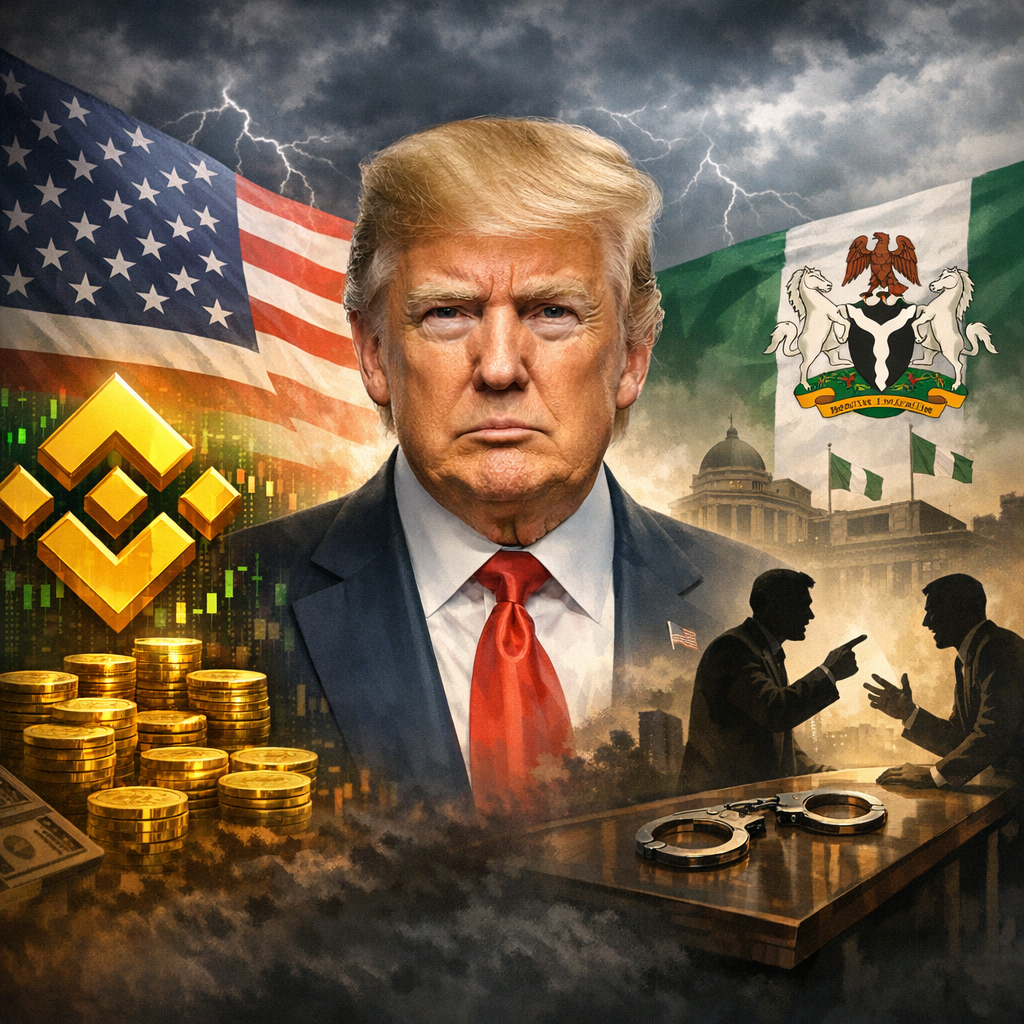
Global Tensions Ignite a Crypto Controversy
Global finance, politics, and crypto are colliding in ways that are getting harder to ignore. What started as a dispute over regulation in Nigeria has spiraled into a multi-layered controversy involving a former U.S. president, a high-profile crypto executive, allegations of detention and extortion, and growing tension between national sovereignty and global digital markets. It’s messy—and it matters.
This article unpacks the situation step by step: what actually happened with Binance executive Tigran Gambaryan, why Nigeria and crypto companies are clashing, how political figures like Donald Trump and Changpeng “CZ” Zhao amplified the situation, and what it all means for investors, businesses, and everyday crypto users navigating cross-border systems.
From Regulatory Crackdown to International Incident
The situation began with Nigeria’s increasing scrutiny of cryptocurrency platforms, particularly Binance. As one of Africa’s largest crypto markets, Nigeria has long had a complicated relationship with digital assets—balancing widespread adoption with concerns about capital flight, currency instability, and financial crime.
In 2024, Nigerian authorities detained Tigran Gambaryan, a former Binance executive and U.S. citizen, during an investigation into the company’s operations. He was arrested alongside a colleague who later left the country, while Gambaryan remained in custody facing money laundering charges.
What might have remained a regulatory enforcement case quickly escalated. Reports emerged that Gambaryan spent roughly eight months in detention, and the situation drew international attention. At one point, 18 U.S. state attorneys general urged the White House to classify him as a hostage—an extraordinary move that signaled how seriously the case was being viewed abroad.
Nigeria, however, maintained that the arrest followed legal procedures. Officials insisted Gambaryan received due process and medical care, framing the situation as a lawful enforcement action rather than political detention.
The case took another turn in October 2024, when charges were dropped on humanitarian grounds, allowing Gambaryan to leave. But by then, the narrative had already fractured into competing versions of reality.
Suggested visual aid: A timeline graphic showing key events—from arrest to release—would help readers follow the sequence clearly.
Political Amplification and Narrative Battles
The story might have cooled after Gambaryan’s release, but it reignited when high-profile figures stepped in. Donald Trump posted on Truth Social, threatening to cut aid to Nigeria and even hinting at possible military action over alleged persecution of Christians. While not directly tied to the Binance case, the statement added geopolitical weight to an already sensitive situation.
Then came Changpeng Zhao (CZ), Binance’s former CEO. He publicly accused Nigeria of effectively “kidnapping” Gambaryan, framing the detention as unjust and politically motivated. His comments quickly went viral, pulling the crypto community—and the broader public—into the debate.
But the reaction wasn’t one-sided. Many Nigerians pushed back strongly, arguing that CZ misrepresented their legal system. From their perspective, the arrest was a legitimate enforcement action within Nigeria’s sovereign rights. Critics pointed out that every country enforces its own financial laws, and foreign companies are not exempt.
CZ eventually deleted his post, but by then the damage—or awareness—was done. The situation had evolved from a legal case into a global narrative battle about fairness, sovereignty, and the power of tech leaders to shape public perception.
Suggested visual aid: A side-by-side comparison chart of claims from Binance/CZ versus statements from Nigerian authorities could clarify differing viewpoints.
Disputed Claims and Rising Stakes
Just when the story seemed to settle, another twist emerged. Gambaryan himself later claimed that Nigerian officials demanded $50 million from the U.S. government in exchange for his release, describing the situation as evidence of a “lawless regime.”
This allegation significantly raises the stakes. If true, it would suggest corruption and coercion at a high level. If unproven or disputed, it further highlights how difficult it is to separate fact from narrative in international disputes involving governments, corporations, and individuals.
Nigeria has previously denied wrongdoing and has not accepted claims of misconduct in handling the case. This leaves observers in a familiar but uncomfortable position: evaluating conflicting accounts without full transparency.
Cases like this often lack clear resolution because they exist at the intersection of law, diplomacy, and media influence. Each party—government, corporation, and individual—has incentives to frame the story in its favor.
Why Nigeria Sits at the Center of Crypto’s Future
Nigeria isn’t just another country in the crypto ecosystem—it’s one of the most important markets globally. High inflation, currency volatility, and limited access to traditional financial services have driven widespread adoption of digital assets.
However, this same environment makes regulators cautious. Governments worry about:
- Capital leaving the country through crypto channels
- Loss of control over monetary policy
- Potential use of crypto for illicit financial activity
- Tax enforcement challenges across decentralized systems
Binance’s decision to suspend naira trading last year reflects how serious these tensions have become. When a major exchange exits local currency support, it signals deeper structural friction between regulators and platforms.
This isn’t unique to Nigeria. Similar conflicts have appeared in the U.S., Europe, and Asia. But in emerging markets, the stakes are often higher because crypto plays a more central role in everyday financial life.
Suggested visual aid: A map highlighting crypto adoption rates across Africa, with Nigeria emphasized, would provide helpful context.
Navigating Risk in a Borderless Financial System
For individuals and businesses operating in crypto, this situation offers a clear warning: geopolitical risk is no longer theoretical—it’s operational.
One of the most important steps you can take is maintaining clean, well-organized records across jurisdictions. This becomes critical if you interact with multiple countries, exchanges, or fiat on-ramps.
A simple but effective process includes:
1. Tagging transactions by country or jurisdiction. This helps track where funds originate and where they flow.
2. Separating fiat and crypto activity by region. This makes audits and compliance checks much easier.
3. Recording exchange interactions clearly. Note which platforms were used and under which regulatory environments.
4. Keeping a timeline of major transactions. This can be invaluable if questions arise later.
5. Using tools designed for multi-jurisdiction tracking. Some platforms allow you to label inflows, outflows, and conversions by region, reducing manual effort.
These steps aren’t just about taxes—they’re about protecting yourself in an environment where regulations can shift quickly and unexpectedly.
Suggested formatting note: This section could be presented as a numbered checklist or flowchart for easier application.
A Glimpse Into Crypto’s Political Future
The Gambaryan case, the reactions from CZ and Trump, and the broader Nigeria–Binance conflict all point to a bigger reality: crypto is no longer operating on the edges of the global system. It’s embedded in it—and that means it inherits all the complexity of international politics.
As governments assert control and companies push for global reach, friction is inevitable. What’s new is how quickly these disputes can escalate, drawing in political leaders, shaping public opinion, and affecting markets in real time.
For users and investors, the takeaway is simple but important: pay attention to jurisdictional risk. Where your assets move—and how they’re regulated—can matter just as much as what you invest in.
This situation may settle, or it may escalate further, especially with ongoing political rhetoric and unresolved regulatory tensions. Either way, it’s a clear signal that the future of crypto will be shaped not just by technology, but by diplomacy, law, and power.
References and Further Reading
- Reports on Binance’s regulatory challenges in Nigeria (Reuters, Bloomberg)
- Statements from Nigerian government officials regarding crypto policy
- Public commentary from Changpeng Zhao (CZ) on social media platforms
- U.S. state attorneys general communications بشأن Gambaryan’s detention
- Research on crypto adoption in Africa (Chainalysis Global Crypto Adoption Index)
For deeper insight, readers may also explore policy papers on digital asset regulation in emerging markets and case studies on cross-border financial enforcement.